Thursday, October 30, 2025 from Committee to Protect Journalists
New York, October 30, 2025 — The Committee to Protect Journalists is deeply alarmed by reports emerging from El-Fasher in Sudan’s North Darfur state, which the paramilitary Rapid Support Forces (RSF) has captured in recent days,...Thursday, October 30, 2025 from Committee to Protect Journalists
The Committee to Protect Journalists on October 19 joined five civil society organizations in a letter urging Bangladesh’s interim government, led by Nobel Laureate Muhammad Yunus, to strengthen protection of human rights and press...Thursday, October 30, 2025 from Global Investigative Journalism Network
 The four-day event will showcase 25 feature-length and short-form documentaries that shine new narrative light on urgent topics in North America and far beyond.
Wednesday, October 29, 2025 from Committee to Protect Journalists
Dakar, October 29, 2025—The Committee to Protect Journalists calls on Senegalese authorities to immediately release two journalists arrested in an October 28-29, 2025, crackdown on two outlets...Wednesday, October 29, 2025 from Committee to Protect Journalists
New York, October 29, 2025—The Committee to Protect Journalists calls for a thorough investigation into a recent Russian attack in Ukraine, which wounded Ivan Zakharenko, a local producer with German media group WELT. “The Russian...Wednesday, October 29, 2025 from Journalist's Resource
President Donald Trump has deployed or threatened to deploy National Guard troops to several major U.S. cities. Journalists who know the history and legal authorities of these troops can offer audiences context on the deployments. The...Wednesday, October 29, 2025 from Committee to Protect Journalists
New York, October 28, 2025—The Committee to Protect Journalists calls for the reversal of an October 27 court decision in Kyrgyzstan declaring the publications of investigative outlets Temirov Live and Kloop “extremist.”...Wednesday, October 29, 2025 from Global Investigative Journalism Network
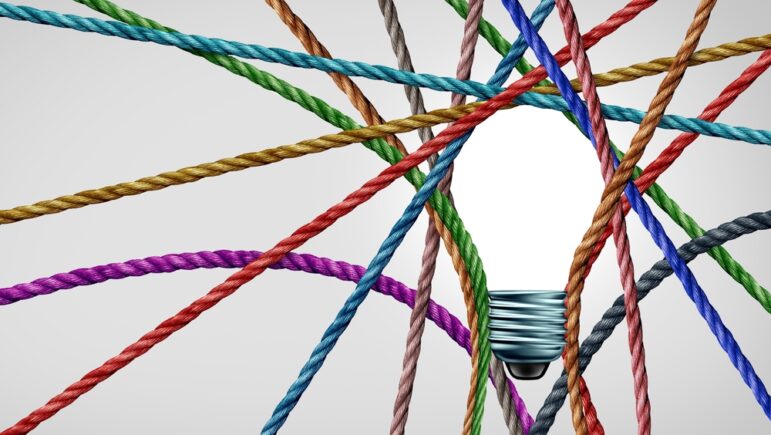 Networking in journalism, especially investigative journalism, is not merely about establishing superficial contacts but about building a trust-based, ethical, and resilient professional community.
Tuesday, October 28, 2025 from Journalist's Resource
Use these story ideas to educate your audiences about school counselors' influence on students' mental health, academic achievement and college plans and the challenges counselors must overcome to do their work. The post 4 story ideas to...Tuesday, October 28, 2025 from Committee to Protect Journalists
Unprecedented crimes against journalists call for unprecedented actions The Committee to Protect Journalists called on October 30, 2025, for radical reform of the systems to investigate journalist killings and hold perpetrators to...Tuesday, October 28, 2025 from Committee to Protect Journalists
Istanbul, October 27, 2025—Turkish authorities should release TELE1 editor-in-chief Merdan Yanardağ and withdraw the order to assign a trustee to seize control of the outlet, the Committee to Protect Journalists said Monday....Tuesday, October 28, 2025 from Committee to Protect Journalists
New York, October 28, 2025 — The Committee to Protect Journalists renewed its call for an independent and transparent investigation into Israel’s killing of Palestinian-American journalist Shireen Abu Akleh, after a news report suggested...Tuesday, October 28, 2025 from Committee to Protect Journalists
New York, October 27, 2025—The Committee to Protect Journalists is alarmed by reports that freelance Sudanese journalist Muammar Ibrahim was detained by the Rapid Support Forces (RSF) during the paramilitary group’s advance on the...Tuesday, October 28, 2025 from Global Investigative Journalism Network
 Type Investigations goes behind the scenes of a recent exposé on how hospitals are turning to medical deportations of undocumented patients in the United States.
Monday, October 27, 2025 from Global Investigative Journalism Network
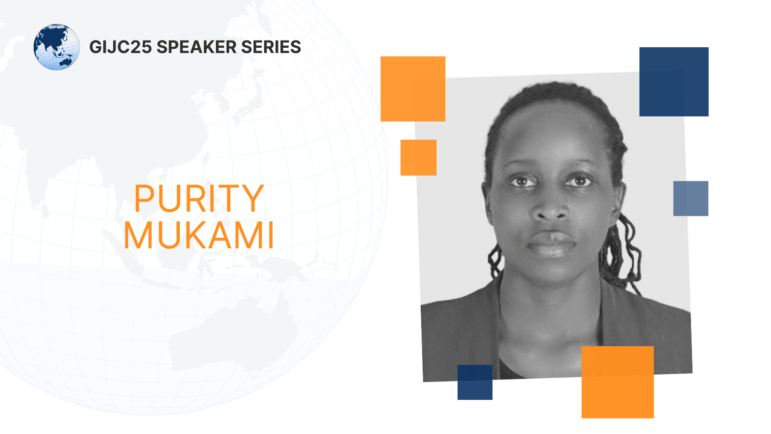 GIJC25 speaker Purity Mukami, who trained as a statistician, is one of the pioneering women reporters helping to build data journalism in East Africa.
Friday, October 24, 2025 from Committee to Protect Journalists
Nairobi, October 24, 2025—The Committee to Protect Journalists calls on the Ethiopian Media Authority to immediately lift its license suspension of Deutsche Welle (DW) correspondents operating in the country, and to...Friday, October 24, 2025 from European Federation of Journalists
On 1 November last year, sixteen people were killed when the Novi Sad Canopy Railway collapsed. This tragedy sparked nationwide protests against government corruption that continue to this day. While Serbian prosecutors have eventually...Friday, October 24, 2025 from Global Investigative Journalism Network
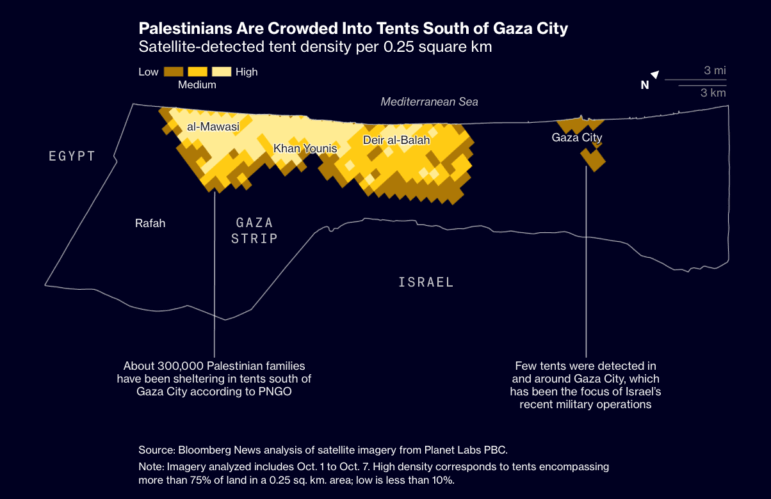 Our round-up of the best in recent data journalism also features stories on what happens next in Gaza, a wildfire in a Namibian nature reserve, and the rise of the bespoke tailoring market in India.
Thursday, October 23, 2025 from European Federation of Journalists
War correspondent Olena Gramova and cameraman Yevgen Karmazin, both working for State-funded news organisation Freedom Media, were killed by a drone attack in the city of Kramatorsk, eastern Ukraine, on 23 October. A third reporter,...Thursday, October 23, 2025 from European Federation of Journalists
Andrzej Poczobut, Belarusian-Polish journalist and a critic of Alexander Lukashenko’s regime, and Mzia Amaglobeli, Georgian journalist and director of media outlets Batumelebi and Netgazeti, are the laureates of the 2025 Sakharov Prize...Thursday, October 23, 2025 from Global Investigative Journalism Network
 Through her two-plus decades of mentoring young journalists, Joke Kujenya has left a legacy of fostering and strengthening investigative reporting in a difficult press climate.
Wednesday, October 22, 2025 from European Federation of Journalists
The European Federation of Journalists (EFJ) joined the Global Forum for Media Development (GFMD) and more than 100 organisations in calling for robust and strategic EU investment in free and independent media in response to the proposal...Wednesday, October 22, 2025 from European Federation of Journalists
The European Federation of Journalists (EFJ) joined the undersigned organisations in calling for the removal of the reported anti-LGBTQ+ provision from the 11th Judicial Package which would restrict and possibly criminalise media...Wednesday, October 22, 2025 from Global Investigative Journalism Network
 Since 2020, the exiled outlet’s investigations have led to approximately 90 sanction actions, proving how journalism can make a real impact on authoritarian regimes.
Tuesday, October 21, 2025 from European Federation of Journalists
Voices, the European Festival of Journalism and Media Freedom, returns to Florence at Teatro del Maggio Musicale on 10–12 March 2026. Following the success of its debut in Florence and the second edition in Zagreb, which drew more than...Tuesday, October 21, 2025 from European Federation of Journalists
On 10 October 2025, the Trade Union of Media of Montenegro (SMCG) signed the Protocol on the Protection of Journalists with governments’ representatives (Supreme State Prosecutor, Ministers of Culture and Media, Justice, and the State...Tuesday, October 21, 2025 from Global Investigative Journalism Network
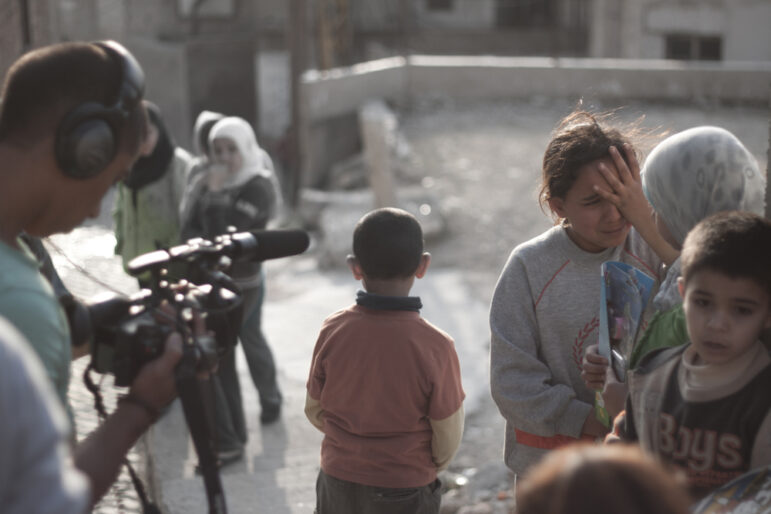 Reporters, editors, and experts in Iraq, India, Nigeria, and Bangladesh who cover regions with longstanding tensions or conflict between communities share tips and best practices for reporting responsibly — and safely.
 Monday, October 20, 2025 from European Federation of Journalists
Russian state-controlled news agency RIA Novosti reported on 16 October that war correspondent Ivan Zuev was killed by a drone attack in the Russian-occupied Zaporizhzhia region, southeastern Ukraine. The International and the European...Monday, October 20, 2025 from Journalist's Resource
 We explain how ACA health insurance marketplaces work, why enrollment has grown recently, what's at the heart of the US government shutdown and what's at stake for consumers. The post The battle over Affordable Care Act insurance...
Monday, October 20, 2025 from Global Investigative Journalism Network
 Natalia Viana, co-founder and executive director of Agência Pública, Latin America’s largest nonprofit newsroom, has investigated human rights and the spread of online disinformation.
Friday, October 17, 2025 from Global Investigative Journalism Network
 In this GIJN webinar, investigative journalists from around the world will gain practical strategies and tools for tracking, verifying, and reporting on online scams. Whether you’re new to the topic or looking to deepen your expertise,...
Friday, October 17, 2025 from European Federation of Journalists
The European Federation of Journalists (EFJ) joins the undersigned journalists and media freedom organisations in strongly condemning the car bomb attack on one of Italy’s leading investigative journalists and his family, Sigfrido...Friday, October 17, 2025 from Global Investigative Journalism Network
 The first Global Investigative Journalism Conference to be held in Asia will feature a treasure-trove of Asia-focused panels, data workshops, and networking events,
Thursday, October 16, 2025 from Global Investigative Journalism Network
 Investigations from Pakistan, Bangladesh, and India illuminate the routes and networks fueling human trafficking and people smuggling in, and from, the region.
Wednesday, October 15, 2025 from Journalist's Resource
Federal datasets have been manipulated and removed since the beginning of the Trump administration and continue to be under threat. In this piece, three data experts explain the critical consequences of this loss. The post How to...Wednesday, October 15, 2025 from European Federation of Journalists
On the eve of the anniversary of the murder of Maltese investigative journalist Daphne Caruana Galizia, the European Federation of Journalists (EFJ) joins press freedom and journalists’ groups in calling on Malta to set up a national...Wednesday, October 15, 2025 from Global Investigative Journalism Network
 This small yet notorious investigative outlet was formed almost by accident — but has gone on to investigate electoral issues, conflict, and the death of an Indian journalist.
Tuesday, October 14, 2025 from Global Investigative Journalism Network
 The award-winning reporter and deputy CEO of Taiwan’s The Reporter says public support is the “vital force” that ensures investigative journalism continues to exist.
Monday, October 13, 2025 from Global Investigative Journalism Network
 This October, GIJN member representatives will vote to elect three regional representatives and four at-large directors for the 15-person Board of Directors.
Monday, October 13, 2025 from Global Investigative Journalism Network
 This guide introduces journalists to valuable information sources for China-focused investigations and demonstrates practical methods for accessing and utilizing key reporting tools.
Friday, October 10, 2025 from Global Investigative Journalism Network
 Data storytelling newsrooms have found innovative approaches to navigate closed data regimes, political pressures, and resource gaps.
Thursday, October 9, 2025 from Global Investigative Journalism Network
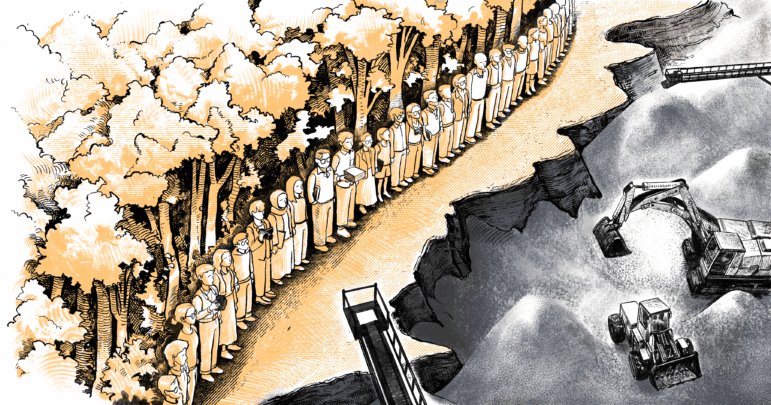 Outlets across the region are collaborating to investigate the environmental harms that cross borders.
Wednesday, October 8, 2025 from Journalist's Resource
As municipalities face potential cuts to federal funding for addressing homelessness, we dig into the research on what works to help people achieve permanent housing. The post Reducing homelessness in the US: A solutions-focused,...Wednesday, October 8, 2025 from Global Investigative Journalism Network
 Kunda Dixit speaks to GIJN about the challenges he has faced in a storied career in investigative reporting, from going into exile to reporting in the face of legal attacks.
Tuesday, October 7, 2025 from Global Investigative Journalism Network
Join WAN-IFRA for the 77th World News Media Congress, taking place in Marseille, France. https://wan-ifra-congress.com/2026Wednesday, October 1, 2025 from Journalist's Resource
Journalists often overgeneralize study results by reporting that they apply to a much larger group of people than they actually do. In this tip sheet, scholars offer guidance and explain why it's a bad idea to rely on artificial...Tuesday, September 30, 2025 from Journalist's Resource
In-depth interviews with health and science journalists reveal that while some feel confident in identifying predatory journals, they still mostly rely on prestige journals to avoid problematic research. The post Study sheds light on...Tuesday, September 30, 2025 from Journalist's Resource
It’s important for journalists to be aware of predatory journals because such journals pose a threat to the integrity of science journalism. The post How to spot predatory journals: 4 tips and 2 checklists appeared first on The...Monday, September 22, 2025 from Journalist's Resource
Asking these 13 questions can help journalists spot red flags in research, including studies that policymakers and elected officials use to defend their stances on certain issues. The post How to gauge the quality of a research study: 13...Friday, September 19, 2025 from Journalist's Resource
In this piece, we share reporting tips, explain how vaccine side effects are tracked in the U.S., and discuss research on the safety of childhood vaccines. The post Childhood vaccines: What research shows about their safety and potential...